Your AI cites sources and can still give the wrong answer

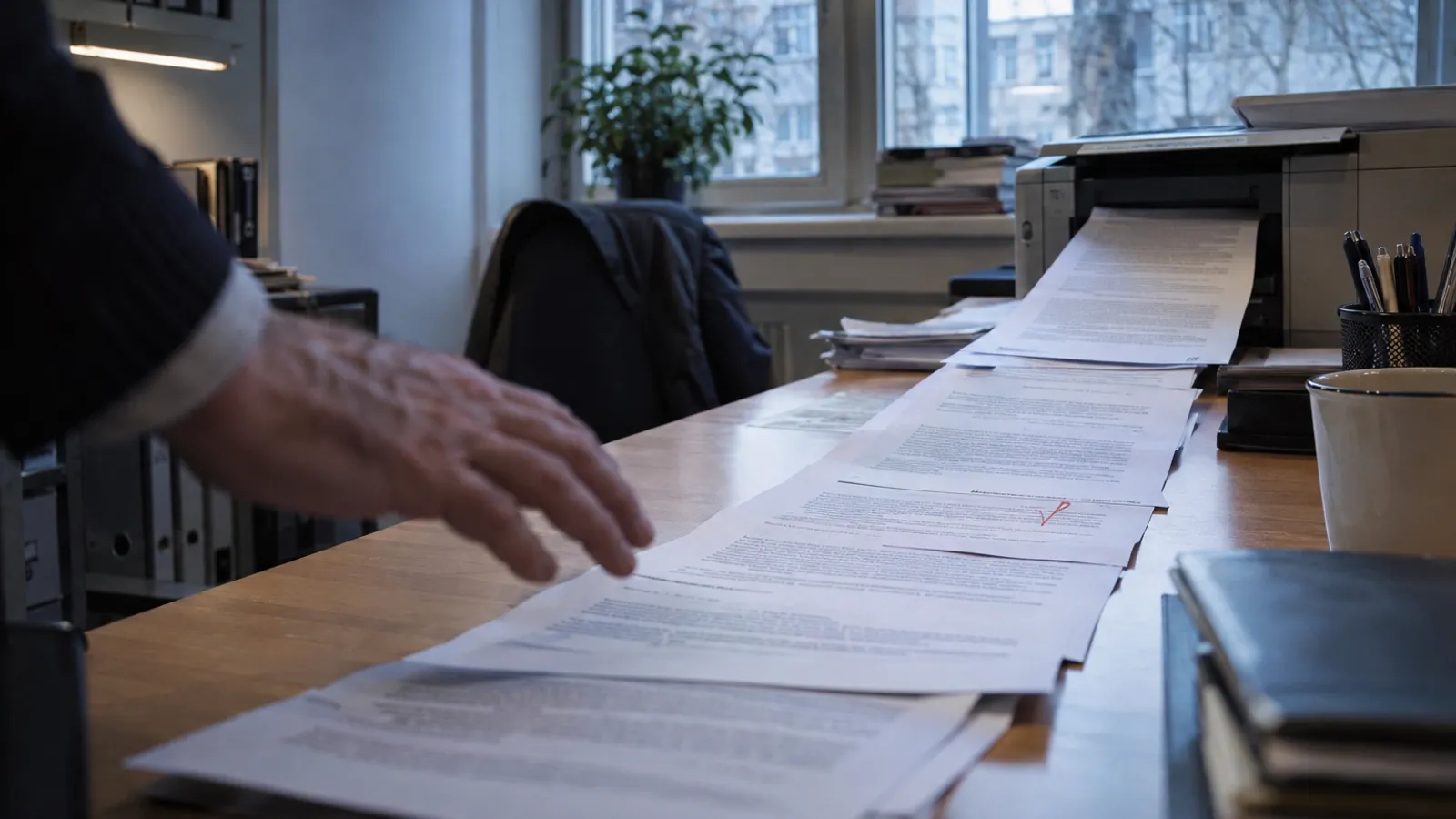
Monday morning. Forty-three unread emails and a question from support: which delivery commitment applies to this customer? The answer is somewhere, perhaps in the CRM, perhaps in an old email. A general-purpose AI cannot see those internal sources. RAG is designed to give it access. But how does the right passage make it into the answer, and how can you tell when the search has picked the wrong document?
AI needs your documents
A general-purpose AI can talk about all sorts of things and still have no idea what returns period your company gives customers. That knowledge sits in internal files, emails or CRM notes. Without access to them, the model can draw only on its training data and the current conversation.
RAG stands for Retrieval-Augmented Generation. In practice, a system first searches external sources for relevant information, then uses a language model to draft an answer. The model does not need to be retrained. That is what makes the approach appealing to small businesses and large companies alike: existing knowledge can be used to answer questions without transferring every detail into the model itself.
Imagine an employee asking during onboarding how to escalate a customer complaint. The AI should not improvise a convincing answer. It should find the right process document. But how does the system know which passage to look for?
From documents to the right passage
The process starts by splitting documents into smaller sections, known as chunks. The system turns each chunk into an embedding, a sequence of numbers that represents its meaning. These number sequences are stored in a database so the system can find similar passages later.
When someone asks a question, vector search looks for sections whose meaning is close to the question. So “What do we do when a delivery is late?” might bring up passages about “shipping delays”. That is useful when someone uses different wording from the handbook.
The passages found by the search are sent to the language model along with the question. The model then drafts an answer from them. This also explains the limitation: the model can work only with the material the search actually gives it. If the passage is wrong, incomplete or out of date, the answer can still sound polished.
A messy filing system stays messy
The difficult work often happens before anyone asks the first question. Is the current procedure filed alongside three older versions? Is an important exception mentioned only in an email? A RAG system cannot reliably turn that disorder into a clear company policy.
The size of each text chunk matters too. If a chunk is very large, the important answer may get lost among a lot of other text. If it is too small, it may miss the sentence that explains which customer or process the statement applies to. There is no one-size-fits-all chunk size. The split needs to suit the structure and type of content.
For a small business, that might mean gathering the most common questions about quotes, customer service and onboarding first. A mid-sized business may also need to establish which version of a procedure is current. A larger company will need clear ownership of sources, updates and access rights as well. Decide who is responsible for this work before you start.
Citations help, but they are not proof
An answer with a citation is easier to check. You can see whether the cited passage really describes the returns period or approval process. But a citation is not an automatic fact check. It tells you where the material came from, not whether it is current, complete or authoritative.
For example, the search may find an email with a special commitment and a handbook with the general rule. Both passages may match the term “delivery time”. Vector search measures similarity. On its own, it cannot decide which statement is newer or which one takes precedence in a particular case. You need additional rules and clear labelling of the authoritative sources.
Access rights need to be part of the plan too. If employees are allowed to see only certain documents, the system must respect those boundaries. Otherwise, a new uncertainty arises: the answer may be useful, but was the person asking allowed to see the information behind it?
RAG cannot answer every knowledge question
RAG is particularly useful when a question calls for a specific passage in internal or up-to-date documents. It is not a general fix for every wrong AI answer. An error can also happen because the model fails to retrieve information that is available, or because the question can be interpreted in several ways.
It gets harder when an answer depends on events over time. Vector search can find similar passages, but similarity alone cannot tell you what happened first, which decision replaced an earlier one, or how an assessment changed. For questions that span multiple conversations, irrelevant results can fill the available context window, or important details can be missing.
When deciding whether to use RAG, first check whether your problem is genuinely about searching documents. If you need an answer about a current internal policy, RAG may fit. If you need to track developments across many conversations, you may also need structured memory and rules for handling time-based information. Which question do you need your system to answer reliably?
What this means for your business
Do not start with your entire file archive. Pick a recurring question that makes employees search today or interrupt a colleague. Decide which sources count and who will keep them up to date. Then test the system with real questions, including vague wording and cases where the sources contradict one another.
Check three things for every test answer. Did the search find the relevant passage? Does that passage actually support the answer? Can the person asking open the source and judge whether it is valid? When an answer misses the mark, these checks show whether the problem lies in the documentation, the search or the wording of the answer.
Also agree what should happen when information is missing or sources conflict. A visible gap in the knowledge is better than a confident guess. In day-to-day work, you need a route to escalate questions to someone responsible, as well as time in the work plan to fix recurring gaps. Otherwise, the new search becomes just another place where outdated answers sit.
Klarframe OS is one way to put this into practice. It can connect documents, emails, Notion, Slack and CRM systems, show the sources behind answers and make knowledge gaps visible. The sensible first step is still to choose specific questions, sources and access rights, rather than connecting as many systems as possible.
Frequently asked questions
What does RAG mean in artificial intelligence?
RAG stands for Retrieval-Augmented Generation. A system first searches an external knowledge source, such as internal documents, for relevant passages. A language model then uses those passages to draft an answer. This lets the AI use information outside its training data without needing to be retrained.
What are embeddings and vector search?
An embedding is a sequence of numbers that represents the content of a text passage so a system can compare its meaning with other texts. Vector search uses that comparison to find passages with a meaning similar to the question. It does not automatically determine whether a passage is current or authoritative.
Why does RAG give wrong answers?
An answer may be wrong because the search misses the relevant passage, documents are out of date or contradictory, or splitting a document removes important context. The language model then formulates an answer using the material it received. Tests should therefore check whether the source found by the search really supports the answer.
Can RAG prevent AI hallucinations?
RAG can provide a language model with relevant internal or up-to-date information. It cannot prevent every inaccurate statement. The search may return unsuitable passages, and the model may misunderstand them or make claims that go beyond them. Citations make it easier to check an answer, but they do not replace checking it against the original source.
How do I get started with RAG in my business?
Start with a recurring question and decide which documents are authoritative for it. Check that those documents are current and clear, and decide who will maintain them. Then test the system with real questions and check both the passages it finds and the answers it produces. Agree in advance how the system should handle gaps and conflicting sources.
Interested?
Want to know what this means for your company?
Sources
- Klarframe: Klarframe OS · klarframe.com
- Frontier models can recover up to 65% of facts they can't directly recall — just by thinking longer · VentureBeat, 2026-09-01
- With 91% accuracy, open source Hindsight agentic memory provides 20/20 vision for AI agents stuck on failing RAG · VentureBeat, 2025-12-16
This article was researched and written with AI assistance and automatically checked against the sources listed before publication. More on our AI transparency
Related solutions
- Klarframe OS →
Bring knowledge together, create transparency and act instead of react. Connect knowledge from documents, email, Notion, Slack and CRM with evidence and an interactive knowledge map.
Klarframe AI Readiness Check
How ready is your company for AI?
About ten minutes, instant result with your stage, a 90-day plan, suitable solutions and notes on the EU AI Act.